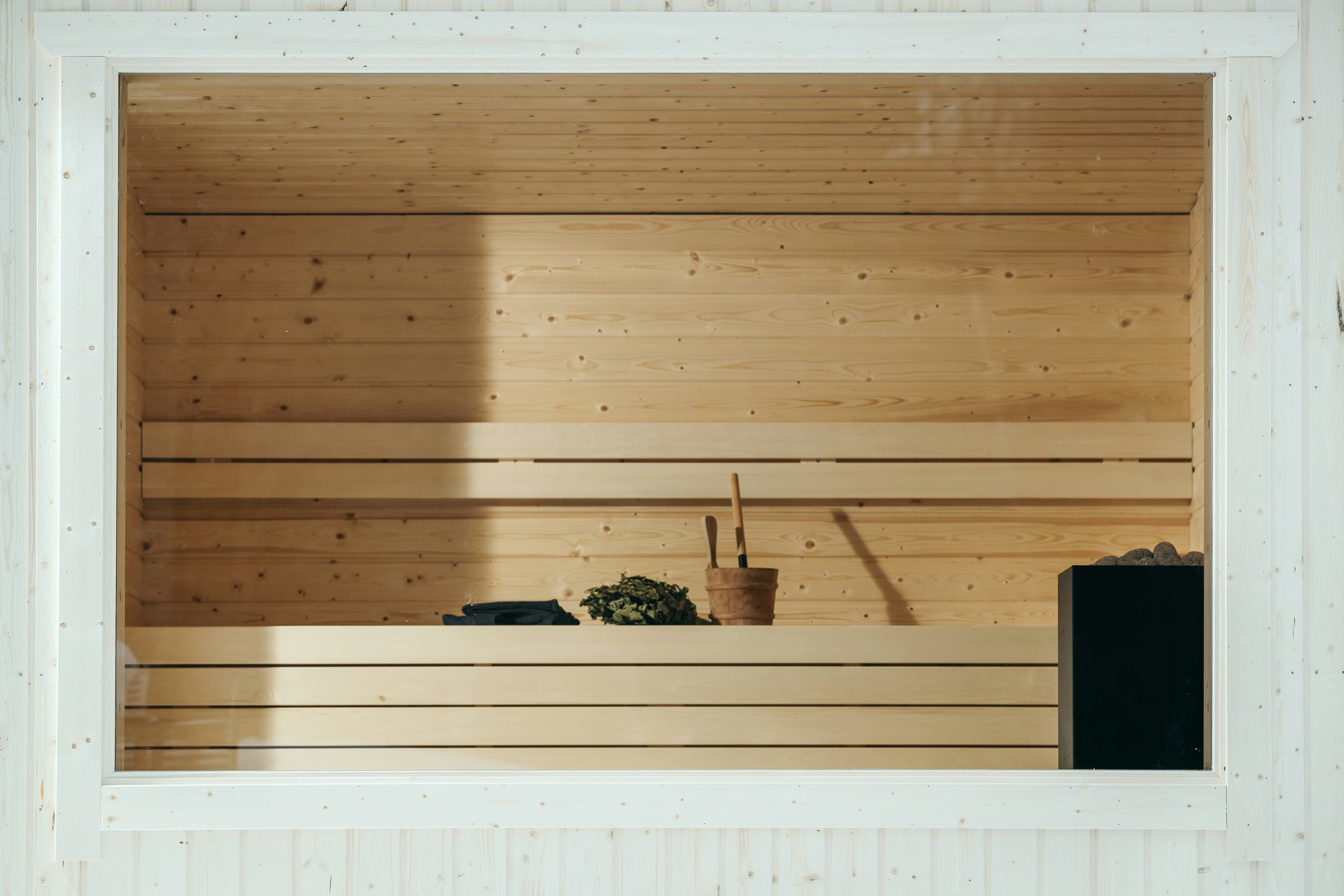
Essential Sauna Accessories
In Finland, a good sauna does not need much. Hot stones, water, and a place to sit. But the right accessories can transform a routine sauna session into something truly special. After decades of sauna traditions passed from generation to generation, I can tell you exactly which accessories are worth your money — and which ones are just marketing fluff.
This guide covers every essential sauna accessory, from the traditional wooden bucket your grandfather used to the modern sauna hats trending in wellness circles worldwide. Whether you are outfitting your home sauna for the first time or looking to upgrade, here is what actually matters.
Explore Accessory Guides
Advertisement
Ad placeholder — connect ad network in production
1. Bucket & Ladle (Kiulu & Kauha)
If you buy only one sauna accessory, let it be a proper bucket and ladle set. In Finnish, the bucket is called kiulu (sometimes saavi) and the ladle is kauha. Together, they are your tools for creating löyly — the steam that rises when you throw water onto the hot sauna stones.
The most popular materials are wooden (pine, aspen, or cedar), copper (a beautiful premium option that develops a warm patina over time), and stainless steel with wooden handles (durable and modern). Avoid all-metal handles — they will burn you. Wooden buckets need occasional oiling to prevent drying and cracking, but the aesthetic and tradition are worth the small effort.
A 4-litre bucket works well for one or two people. If you sauna with family or friends regularly, consider a 7-litre bucket so you do not have to refill as often. Look for a comfortable ladle with a handle at least 40 cm long — it should reach the stones without bringing your hand too close to the heat.
Read our full Bucket & Ladle guide →
2. Sauna Hat
Sauna hats might look quirky, but they serve a genuine purpose. Heat rises, and your head is the highest point in the sauna. Without protection, your head gets significantly hotter than the rest of your body, which can cause dizziness, headaches, and limit how long you can comfortably stay in the heat.
The best sauna hats are made from thick wool felt. Wool is a natural insulator — it keeps the heat out and protects your hair from drying. Merino wool variants are softer on the skin, while linen hats work well as a lighter option for lower temperatures. Cotton hats exist but are the least effective since they absorb moisture and transfer heat.
Sauna hats have deep roots in Russian banya culture, where they are practically mandatory. In recent years, they have gained popularity in Finnish and international wellness circles. You will now find them in sauna shops from London to Los Angeles.
Read our full Sauna Hat guide →
3. Thermometer & Hygrometer
Every sauna should have a thermometer. In Finland, we typically aim for 80–100°C, though personal preference varies widely. Some of us like it at a mild 70°C, while competition-sauna diehards push well beyond 100°C (we do not recommend this for anyone).
A hygrometer measures humidity and is just as important as the thermometer. The magic of löyly is in the balance between temperature and humidity. A dry 90°C feels completely different from a humid 90°C after a generous throw of water. Understanding this balance will help you dial in your perfect sauna experience.
Analog thermometers and hygrometers are the traditional choice. They look beautiful mounted on the sauna wall, need no batteries, and are perfectly accurate for sauna use. Digital options offer precise readings and sometimes track min/max temperatures, but make sure any digital device you bring into a sauna is specifically rated for sauna conditions — regular electronics will not survive the heat and moisture.
Advertisement
Ad placeholder — connect ad network in production
4. Vihta / Vasta (Birch Whisk)
The vihta (or vasta, depending on which part of Finland you are from — it is a forever debate) is a bundle of fresh birch branches tied together. You use it to gently whisk yourself or others in the sauna. It sounds odd if you have never seen it, but it is one of the most quintessentially Finnish sauna traditions.
The whisking stimulates circulation, opens pores, and releases a wonderful natural birch scent in the steam. Fresh birch is best and usually gathered in mid-summer (June–July) when the leaves are young and full. In Finland, many families prepare dozens of vihtas during summer and freeze them for use throughout the year.
Beyond birch, you can find whisks made from eucalyptus (popular in spa settings, with a strong aromatic scent), oak (sturdier leaves that last longer), and even juniper (a Finnish favourite for its sharp, invigorating scent, though the needles can prickle). If you cannot find fresh branches, dried vihtas work well after soaking in warm water for 20–30 minutes before use.
Making your own: gather 20–30 young birch branches about 40–60 cm long. Strip the lower third of leaves, arrange them into a fan shape with larger leaves on the outside, and tie the handle firmly with twine. Soak in water before use, and prepare to smell like a Finnish forest.
5. Hourglass Timer
The traditional sauna hourglass is a 15-minute timer, and there is a reason for that specific duration. Fifteen minutes is roughly the ideal length for one sauna round — long enough to get a deep sweat going, short enough to stay safe and comfortable. After 15 minutes, you step out, cool down, and go back in for another round.
Why not just use your phone? Because phones do not belong in the sauna. The heat and steam will damage electronics, and more importantly, sauna is supposed to be a break from screens. The Finnish sauna tradition is about being present. An hourglass gives you a visual cue without pulling you out of the moment. Wall-mounted hourglasses with wooden frames are the most popular choice and double as a nice decorative element.
6. Seat Cover (Pefletti)
In Finland, sitting on a pefletti (seat cover) is basic sauna hygiene. Public saunas either provide disposable paper ones or expect you to bring your own towel to sit on. In your home sauna, a dedicated seat cover protects the wood and makes cleaning easier.
The best seat covers are made from linen or thick cotton terry. Linen dries quickly and handles the heat well without getting uncomfortably hot. Some higher-end options feature a non-slip silicone backing. Machine-washable is a must. Many Finnish sauna-goers keep several in rotation — one in the sauna, one in the wash.
Advertisement
Ad placeholder — connect ad network in production
7. Headrest & Backrest
If you enjoy lying down in the sauna (and you should — it gives you the most even heat), a headrest makes a world of difference. Wooden headrests, typically made from aspen, alder, or cedar, cradle your head comfortably and keep it off the hot bench surface.
Backrests lean against the sauna wall and let you sit upright comfortably during longer sessions without pressing your bare back against the hot wooden wall. They are especially helpful in saunas where the back wall gets very warm. Look for ergonomically curved designs in light-coloured wood (aspen is ideal — it stays cooler to the touch than darker woods).
8. Sauna Scents & Oils
Sauna scents elevate the experience from a simple hot room to something truly therapeutic. In Finland, the most traditional scents are birch (from the vihta itself), tar (terva — a quintessentially Finnish scent with a deep, smoky aroma), and pine (fresh and clean, like walking through a Finnish forest).
Eucalyptus is popular for its sinus-clearing properties and cooling sensation. Peppermint provides a refreshing tingle on the skin. Lavender is a newer addition to the Finnish sauna scene but has gained a following for evening saunas because of its calming effects.
How to use scents safely: never pour essential oils directly onto the stones. The concentrated oil can produce unpleasant fumes or even ignite. Instead, add a few drops to the bucket of water and throw that mixture onto the stones. You can also use purpose-made sauna fragrances diluted for safe stone use. Some people hang a small sachet of dried herbs near the ceiling, which is a lovely touch.
9. Towels & Robes
The Finnish towel tradition leans heavily toward linen. Pellavainen pyyhe (linen towel) dries incredibly fast, becomes softer with every wash, and handles the heat and moisture of sauna life better than cotton. Finnish linen towels often come in simple stripes or natural tones — understated and functional, just like Finnish design.
A lightweight linen robe or cotton waffle robe is perfect for cooling down between sauna rounds. In Finland, many people simply wrap a towel around themselves and step outside (even in winter), but a robe is a civilised alternative if you have guests. Look for robes that are absorbent but not too heavy — you will be warming up again shortly.
Looking for the Perfect Sauna Gift?
Check out our curated gift guide with sauna accessories at every price point — from stocking stuffers to luxury sets.
Browse the Sauna Gift Guide →Get Our Free Sauna Accessories Checklist
A printable PDF checklist of every essential sauna accessory, with buying tips and Finnish insider knowledge. Plus weekly sauna tips.